Showing posts with label Shakespeare. Show all posts

Thursday, 6 June 2013

Naughty Shakespeare: Part II

Naught Shakespeare: Part II

Shakespeare's Naughtiest Lines


Hmmm...How to write elegant porn.....?

William Shakespeare is, perhaps, the greatest writer the world has ever seen. Everyone knows his name. Everyone. The Bard wrote with an authority and style that many have tried to imitate and has, no doubt, been taught a hundred times over in school. Yes, the old Bard of Avon has achieved classic status. Yet, many people forget just how raunchy and X-rated many of Shakespeare's works actually are. Behind all of his elegant, flowery prosody, Shakespeare's works were very graphic. In fact, if his works were to be translated into Modern English, I have no doubt that they would never be taught in schools. Don't believe me? Here are just a few examples of the Bill's gutter mind:


1.) Original Text:

“O Romeo, that she were, O that she were/an open-arse and thou a popp’rin’pear.”
 –Romeo and Juliet, Act II, Scene I

Literal Modern Translation: "Too bad Rosaline isn't a walking vagina, homeboy."


2.) Original Text:


“But I might see Cupid’s fiery shaft
Quenched in the chaste beams of the watery moon”
 –A Midsummer Night’s Dream, Act II, Scene 1

Literal Modern Translation: "I saw Love's flaming penis thrust into the virgin Moon's vagina."


3.) Original Text:

“Come, night; come, Romeo; come, thou day in night;
For thou wilt lie upon the wings of night
Whiter than new snow on a raven’s back.
Come, gentle night, come, loving, black-brow’d night,
Give me my Romeo”
 –Romeo and Juliet, Act III, Scene II

Literal Modern Translation : Oh, god, I can't wait to lose my virginity. Romeo, bang me now!"


Shakespeare was something of a genius. He managed to make cheesy porn lines sound good! Here's an example of how he managed to successfully merge smut and wit in Hamlet:


Original Text                                                 Literal Modern Translation

HAMLET
Lady, shall I lie in your lap?
     
OPHELIA
 No, my lord.
     
HAMLET
I mean, my head upon your lap?
    
OPHELIA
Ay, my lord.
     
HAMLET
Do you think I meant country matters?
     
OPHELIA
I think nothing, my lord.
     
HAMLET
That's a fair thought to lie between
maids' legs.

HAMLET
Ophelia, should I lie in your lap?


OPHELIA
WTF?! No, Hamlet, you can’t.


HAMLET
Uh, I mean, may I lie my head in your lap?


OPHELIA
Oh...okay.


HAMLET
*scoff* What? Did you think that I was talking about banging?


OPHELIA
I wasn’t thinking anything.


HAMLET
Hmmm...Banging a chick actually sounds good right about now.


*lie = As you all may know, in the olden days, to "lie" with someone meant to have sex with them.

*country = cunt-ry (talking about her vagina, people)!

*nothing = Slang for vagina (which, here, means sex).


I highly recommend getting a copy of Naughty Shakespeare as it contains much more depth and detail into the dirty mind of the Bard. You can get it at Amazon for a reasonable price. I actually got one for my friend who is a Lit major and she absolutely loved it:



Know any dirty Shakespeare Lines of your own?


For more information, please visit: The Mary Sue


Friday, 1 February 2013

Shakespeare's Sonnet 130: Translation


Author: William Shakespeare aka "The Bard"

Written: Between 1564 C.E and 1609 C.E.

Published by: Thomas Thorpe, 1609 C.E.

Poem in a nutshell: "You're a Plain Jane and I love you all the same."


Original Text
Modern Day Translation
My mistress' eyes are nothing like the sun;
Coral is far more red than her lips' red;

If snow be white, why then her breasts are dun;
If hairs be wires, black wires grow on her head.
I have seen roses damask'd, red and white,
But no such roses see I in her cheeks;
And in some perfumes is there more delight
Than in the breath that from my mistress reeks.
I love to hear her speak, yet well I know
That music hath a far more pleasing sound;
I grant I never saw a goddess go;
My mistress, when she walks, treads on the ground:
And yet, by heaven, I think my love as rare
As any she belied with false compare.
My lover's eyes aren't as bright as the sun;
And her lips aren't as red as coral;
Her breasts are a brownish gray in comparison to pure white snow.
If hairs are like wires, hers are black and not golden.
Her cheeks are not as colorful as the red and white streaked damask roses;
And my lover's breath stinks.
I like when she speaks but, let's face it, music is more pleasing to the ear than her voice.
I don't claim that my lover is a goddess--she's just a plain old regular mortal.
And yet, for all the things that she is not, I find that the love I have for my woman is far more true than those lies found in ridiculous poetry.


Monday, 1 October 2012

The Top Three Most Widely Read Poets

There have been hundreds upon thousands of poets throughout the course of history. Chances are, however, that you're probably not going to escape high school without having read the greatest works by these poets:

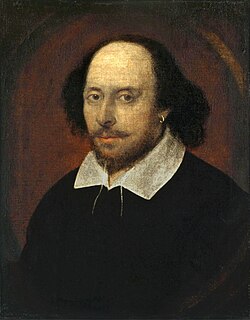
William Shakespeare

The Chandois Portrait of William Shakespeare


Born April 26, 1564, Shakespeare has been regarded as the greatest playwright and poet of all time. For his amazing life achievements, he was nicknamed the "Bard of Avon" or simply "The Bard." A prolific writer, Shakespeare penned 38 plays and 154 sonnets (a style of poetry). Despite some controversy in regard to his date of birth and date, it is commonly held that the poet died on April 23, 1616. Nearly four hundred years later, his work continues to endure with his most famous works being the sonnet "Shall I Compare Thee to a Summer's Day" and plays such as Romeo and Juliet, Hamlet, Macbeth, and Othello.


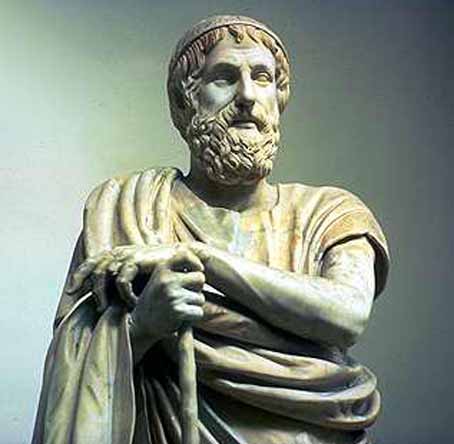
Homer 

An idealized rendering of Homer from Crystalinks

As much of his past is relatively unknown, historians, based on the the life of another poet named Herodotus, estimate that Homer lived between the 7th and 8th century. Homers two most famous epic poems, The Iliad and the Odyssey, widely influenced the progressive shaping of the Greek culture. His long, narrative poems are known for their portrayals of the struggle of man against man, as well as, man against god or the gods. Homer is also credited for starting the Homeric Greek writing style.

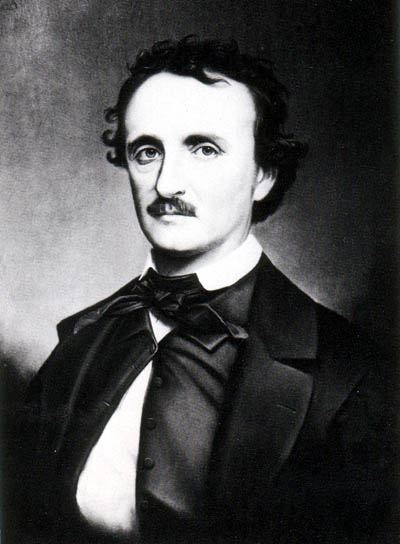
Edgar Allan Poe

1848 "Ultima Thule" daguerreotype of Poe

Edgar Allan Poe was, perhaps, the most famous poet of the 18th century and his work continues to thrive today. Known for his often grotesque and dark poetry, Poe was contributed greatly to both the Gothic and American Romantic Movement. Having lived a very difficult life filled with the loss of loved ones, his work often reflected his feelings of emotional despair and longing. His most famous works are: The Raven, The Pit and the Pendulum, The Black Cat, The Cask of Amontillado, The Masque of the Red Death, The Tell-Tale Heart, and Annabel Lee.


More information on these poets and other notable writers can be found here: http://www.tiptoptens.com/2011/05/31/best-and-most-famous-poets-in-the-history/


Thursday, 31 May 2012

Ariel's Song by WIlliam Shakespeare


Full fathom five thy father lies;
Of his bones are coral made;
Those are pearls that were his eyes;
Nothing of him that doth fade,
But doth suffer a sea-change
Into something rich and strange.
Sea-nymphs hourly ring his knell:
Ding-dong.
Hark! now I hear them — Ding-dong, bell.

Wednesday, 15 February 2012

All The World's A Stage by William Shakespeare

All the world's a stage,And all the men and women merely players;They have their exits and their entrances,And one man in his time plays many parts,His acts being seven ages. At first, the infant,Mewling and puking in the nurse's arms.Then the whining schoolboy, with his satchelAnd shining morning face, creeping like snailUnwillingly to school. And then the lover,Sighing like furnace, with

Iwobi delivers Fulham's first win of season

Alex Iwobi fires Fulham to their first Premier League win of the season against Hull. from BBC News https://ift.tt/qNyzEkx